Monday, December 14, 2009
Week 15 Assignments...
Monday: Prepare for Chapter 6 pre-quiz
Tuesday: Chapter 6 pre-quiz
Wednesday: Maps of Mesoamerica, Andes, North America
Thursday: Chapter 6 Vocab Due. Cultures discussion
Friday: Chapter 6 Quiz, pp 194 2-4; 199 2-5; 205 2-5
Thursday, December 3, 2009
Wednesday, November 18, 2009
Monday, November 16, 2009
Week #11 Assignments...
Monday: Work on project
Tuesday: Chapter 4 HW due
Wednesday: Project due. Chapter 4 Quiz
Thursday: Chapter 5 Workday
Friday: Chapter 5 Pre-quiz, video.
Next Week--Vocab due.
Thursday, November 12, 2009
Chapter 4 Pre-quiz Results...A Swing and a Miss
Although, again, no one reached the 85 benchmark goal for auto 100 homework, I've decided to give each class 3 spots for 1/2 of the hw assignments based on the top 3 scores on the pre-quiz. Period 4: Kim P, Evan C, Fisher G, Derick S (3 way tie for 2nd). Period 8: Alex K, Alex K, Donny T. The people listed do not have to do the vocabulary assignment due Friday!
HW for next Tuesday: pp 116 2-5; 123 2-5; 128 2-6; 135 2-6; 142 2-6
Project Due Tuesday
HW for next Tuesday: pp 116 2-5; 123 2-5; 128 2-6; 135 2-6; 142 2-6
Project Due Tuesday
Monday, November 9, 2009
Extra Credit for the 1st 10 Responders to this post...
Legendary Lost Persian Army Found in Sahara
Click the link above and then...
If you're one of the first 10 students to respond to this article identifying the Greek historian mentioned in both the book and this article you will get a 100 quiz grade.
Click the link above and then...
If you're one of the first 10 students to respond to this article identifying the Greek historian mentioned in both the book and this article you will get a 100 quiz grade.
Week #10 Assignments
Monday: Prepare for Chapter 4 pre-quiz
Tuesday: Chapter 4 pre-quiz
Wednesday: Observation of Veteran's Day. No School.
Thursday: Notes/In class work for Ancient Greece.
Friday: Chapter 4 Vocabulary Due
Next Week: Ancient Greece project due
Friday, November 6, 2009
Today's (Friday 11/6/09) work in the computer lab...
Today we are going to be doing some research on Ancient Greece...
In groups of three, you will be collecting information on the following:
1. Thier Culture
2. Their Architecture
3. Their Arts and Literature
4. Their Leading City-States
5. Wars--With Persian and the Peloponnesian War
6. Their philosophy/Philosophers
7. Alexander the Great and Hellenistic Culture
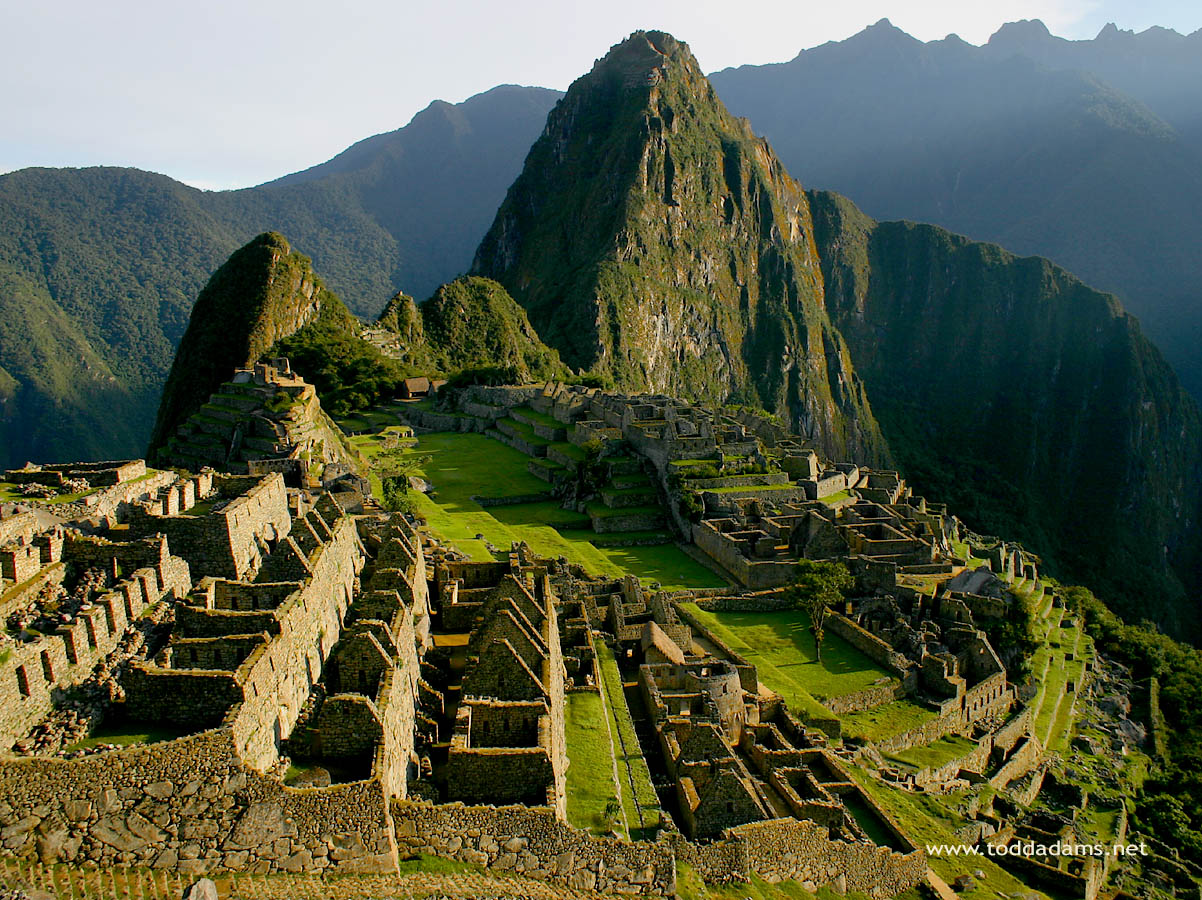
Look for information, pictures, stories, maps, etc of the 7 topics and save them to a word document in your documents and then to the folder on the "S" drive called "Global Studies I" folder. Your Partners can create a folder there to save them in. You may be writing a story, creating a poster collage, a diorama, a newspaper article, a poem, a video, etc. so save a wide variety of objects/articles. Also, be sure to check on the authenticity of your sources.
In groups of three, you will be collecting information on the following:
1. Thier Culture
2. Their Architecture
3. Their Arts and Literature
4. Their Leading City-States
5. Wars--With Persian and the Peloponnesian War
6. Their philosophy/Philosophers
7. Alexander the Great and Hellenistic Culture
Look for information, pictures, stories, maps, etc of the 7 topics and save them to a word document in your documents and then to the folder on the "S" drive called "Global Studies I" folder. Your Partners can create a folder there to save them in. You may be writing a story, creating a poster collage, a diorama, a newspaper article, a poem, a video, etc. so save a wide variety of objects/articles. Also, be sure to check on the authenticity of your sources.
Tuesday, November 3, 2009
Week #9 Assignments...
Monday: notes and discussion chapter 3
Tuesday: finish notes and discussion, review game if time
Wednesday: Chapter 3 Exam, Chapter 3 homework--2-5, 2-6, 2-5, 2-6, 2-5
Thursday: Chapter 4 work day
Friday: Work in computer lab.
Chapter 4 Pre-Quiz on Monday!
Tuesday: finish notes and discussion, review game if time
Wednesday: Chapter 3 Exam, Chapter 3 homework--2-5, 2-6, 2-5, 2-6, 2-5
Thursday: Chapter 4 work day
Friday: Work in computer lab.
Chapter 4 Pre-Quiz on Monday!
Tuesday, October 27, 2009
Week # 8 Assignments
Monday: Begin Chapter 3 Poster project with a partner
Tuesday: Finish Chapter 3 Poster Project
Wednesday: Notes/discussion
Thursday: Chapter 3 vocab due. Notes/Discussion
Friday: Chapter 3 section questions due. Exam if able, Monday if not!
Tuesday: Finish Chapter 3 Poster Project
Wednesday: Notes/discussion
Thursday: Chapter 3 vocab due. Notes/Discussion
Friday: Chapter 3 section questions due. Exam if able, Monday if not!
Monday, October 26, 2009
Nick Wilson Memorial Skatepark. Nike 6.0 Banksgiving
Nick was a former student here in Newark Valley, class of 1998. Great kid who died serving his country. I miss him and thank him for his ultimate sacrifice!
Thursday, October 22, 2009
Thursday and Friday's work in class due Monday, October 26th.
Pretest for Chapter 3. Map project: Pages 31, 40-41, 47, 69, 103, 105. They need to put each map on a separate piece of paper for their notes. Each map needs to be labeled and have a key. They can also put in the names of modern day countries in their maps in parentheses. Maps should be colored with a colored pencil or crayon. This will be graded Monday.
Monday, October 19, 2009
Week 7 Assignment Announcements
Monday: Review for test
Tuesday: Test Chapter 2 Ancient Middle East
Wednesday: Chapter 3 Independent Work Day
Thursday: Chapter 3 Pre-Quiz, Begin Chapter 3
Friday: Blog Work Due (to be posted Tuesday or Wednesday)
Tuesday: Test Chapter 2 Ancient Middle East
Wednesday: Chapter 3 Independent Work Day
Thursday: Chapter 3 Pre-Quiz, Begin Chapter 3
Friday: Blog Work Due (to be posted Tuesday or Wednesday)
Sunday, October 18, 2009
Chapter 2 Study Guide
Key Civilizations
Key Innovations
- Sumer: social hierarchy; cuneiform writing; advances in astronomy and mathematics
- Egypt: bureaucracy; pyramids; peace treaty; mummification; social hierarchy; hieroglyphic, hieratic, and demotic writing; papyrus; advances in medicine, astronomy, and mathematics; 365-day calendar
- Babylon: legal code; advances in astronomy and mathematics
- Hittites: iron working
- Assyrians: legal regulation of royal household; libraries
- Israel: monotheistic religion, Judaism
- Persians: government organized into provinces with governors; roads; common set of weights and measures; use of coins and money economy; new religion of Zoroaster
- Phoenicians: Tyrian purple dye; alphabet
Key Causes of Rise and Fall of Civilization
The Rise of Civilization
Concept Connector
Cumulative Review
Record the answers to the questions below on your Concept Connector worksheets. In addition, record information from this chapter about the following concepts:
- Trade: Phoenician sea traders
- Geography’s Impact: Tigris and Euphrates rivers
- Advances in Technology
During prehistory, technological advances such as the development of stone tools and of domestication and farming allowed hominids and early humans to radically expand the possibilities for their lives. How do those advances compare in impact to technological advances that the peoples of ancient Mesopotamia and Egypt made? Think about advances in the following:
- military technology
- writing
- the sciences
- military technology
- Belief Systems
People in many early civilizations established belief systems that became an important force in shaping their societies. Compare the influence of religion on ancient Egyptian and ancient Israelite society. Think about the effects of religion on these aspects of society:
- government and law
- daily life
- standards for behavior
- the sciences
- art
- government and law
- Empire
To maintain control over a vast empire, it was vital that a ruler be well-respected. Based on the empires of the ancient Middle East and Egypt, what characteristics do you think made the leaders you have read about most successful? Think about the following:
- spiritual leadership
- establishment of laws and punishments for crimes
- military power
- treatment of subjects
- spiritual leadership
Connections to Today
- Economic Systems: Money in the World Today
The establishment of a money economy by the Persians allowed the many peoples living within the vast empire to exchange goods more easily because they shared a common currency. Today, many countries have their own unique coins and bills, so all people within each country use the same money. To sell goods or services in another country, however, people must exchange their own money for the equivalent amount of the other country’s money. Do you think there should be one common world currency? Explain your answer.
- People and the Environment: A Dam on the Nile
Like their ancient ancestors, modern Egyptians rely on the Nile. Nearly all Egyptians live on the 4 percent of land closest to the Nile’s shores. Since 1970, when Egypt completed construction of the Aswan High Dam across the Nile, people have had year-round access to water for farming and drinking. The dam also generates half the country’s electricity. However, it prevents the Nile’s rich silt from reaching farmland downstream. Compare the ways in which the Nile has served as a challenge and a resource in ancient times and today.
Short Answer with a small dbq question--Just Review
War in the Ancient Middle East
Military campaigns were conducted frequently in the ancient Middle East. Scribes and artists often recorded their leaders’ victories on monuments. The following documents reveal that these early wars were both devastating and widespread.Document A
“. . . [My troops] were like lions roaring upon the mountaintops. The chariotry consisted of runners, of picked men, of every good and capable chariot-warrior. The horses were quivering in every part of their bodies, prepared to crush the foreign countries under their hoofs. . . . Those who reached my frontier, . . . their heart and their soul are finished forever and ever. Those who came forward together on the sea, the full flame was in front of them at the river-mouths, while a stockade of lances surrounded them on the shore. . . . I have made the lands turn back from (even) mentioning Egypt; for when they pronounce my name in their land, then they are burned up.”
—From Pharaoh Ramses III of Egypt
Document B
“In the eighteenth year of my rule I crossed the Euphrates for the sixteenth time. [King] Hazael of Damascus put his trust upon his numerous army and called up his troops in great number. . . . I fought with him and inflicted a defeat upon him, killing with the sword 16,000 of his experienced soldiers. I took away from him 1,121 chariots, 470 riding horses as well as his camp. . . . I followed him and besieged him in Damascus, his royal residence. I cut down his gardens. . . . I marched as far as the mountains of Hauran, destroying, tearing down and burning innumerable towns, carrying booty away from them which was beyond counting. I marched as far as the mountains of Ba’li-ra’si . . . and erected there a stela [stone pillar] with my image as king.”
—From King Shalmaneser III of Assyria
Document C
Soldiers of Ramses III in Battle
Document D
Soldiers of Shalmaneser III in Battle
Analyzing Documents
Use your knowledge of ancient warfare and Documents A, B, C, and D to answer questions 1–4.- a victim of an ambush.
- the ally of a conquering ruler.
- the enemy of a conquering ruler.
- the leader of a successful campaign.
2. What did the narrator of Document B do in the mountains of Ba’li-ra’si after he conquered the king of Damascus?
- conquer a great city
- set up a monument showing his image
- chase the enemies’ leader
- receive tribute from the conquered people
- who won each battle shown
- how many men fought in each battle
- where each battle took place
- what weapons the soldiers used in battle
4. Consider that inscriptions and artwork were two different means for rulers to tell their people about their conquests. What motives would have led the rulers to have such documents created? Do you think such documents serve as reliable records of historical events? Use your knowledge and specific information from these documents to support your opinion.
Vocab Review for Exam
Subscribe to:
Posts (Atom)